Dubai has no shortage of trading ads, luxury office videos, and "mentor" accounts. That strong interest in forex also attracts weak courses, rented status symbols, and people who sell hope faster than skill.
Many people searching for forex trading classes in Dubai want quick progress, so they become easy targets. The safer path is slower and simpler. Check the trainer, study the syllabus, and read the terms before you pay. That process starts with the person behind the course.
Check the trainer before you trust the course
A polished Instagram page proves almost nothing. The same goes for a WhatsApp pitch, a rented supercar, or profit screenshots with no context. Scammy courses often sell authority first and education second.
A real teacher should be easy to identify. You should know who they are, what company they run, and where they teach from if they claim to have a Dubai office.

Look for real experience, clear identity, and a track record you can verify
Start with the basics. Search the trainer's full name, company name, and any office details they mention. Then check LinkedIn, business listings, event pages, interviews, or past workshop mentions. If the person teaches publicly, traces should exist.
Consistency matters. A trainer who claims five years of teaching should not appear online only last month. A clear bio, steady posting history, and public teaching record carry more weight than flashy lifestyle content.
Screenshots of profit are weak proof because they can be edited, cropped, or taken from demo accounts. Even real profits do not prove teaching skill. You need evidence that students were taught clearly and over time.
If you're comparing providers, it helps to review a course page that shows structure openly, such as these forex trading classes in Dubai. Clear course details are easier to trust than vague promises in direct messages.
Be careful with promises of easy money, secret systems, or guaranteed returns
The language often gives scammers away. Watch for claims like "low risk, high return," "join today," "guaranteed income," "copy my trades," or "VIP signals included." Those lines are built to rush you.
No forex teacher can promise profits, because no one controls the market.
Honest educators talk about risk, drawdowns, practice, and time. They explain that losses happen, demo trading matters, and discipline beats excitement. If a seller avoids that reality, they're selling a fantasy, not a class.
Make sure the class teaches skills, not hype
Once the trainer passes a basic trust check, move to the course itself. This is where many bad offers fall apart. The sales page may sound strong, yet the actual class can be thin, rushed, or built around signals instead of learning.
A good course should feel like a school plan, not a motivational speech. You should know what gets taught, how long it takes, and what you will do during each session.
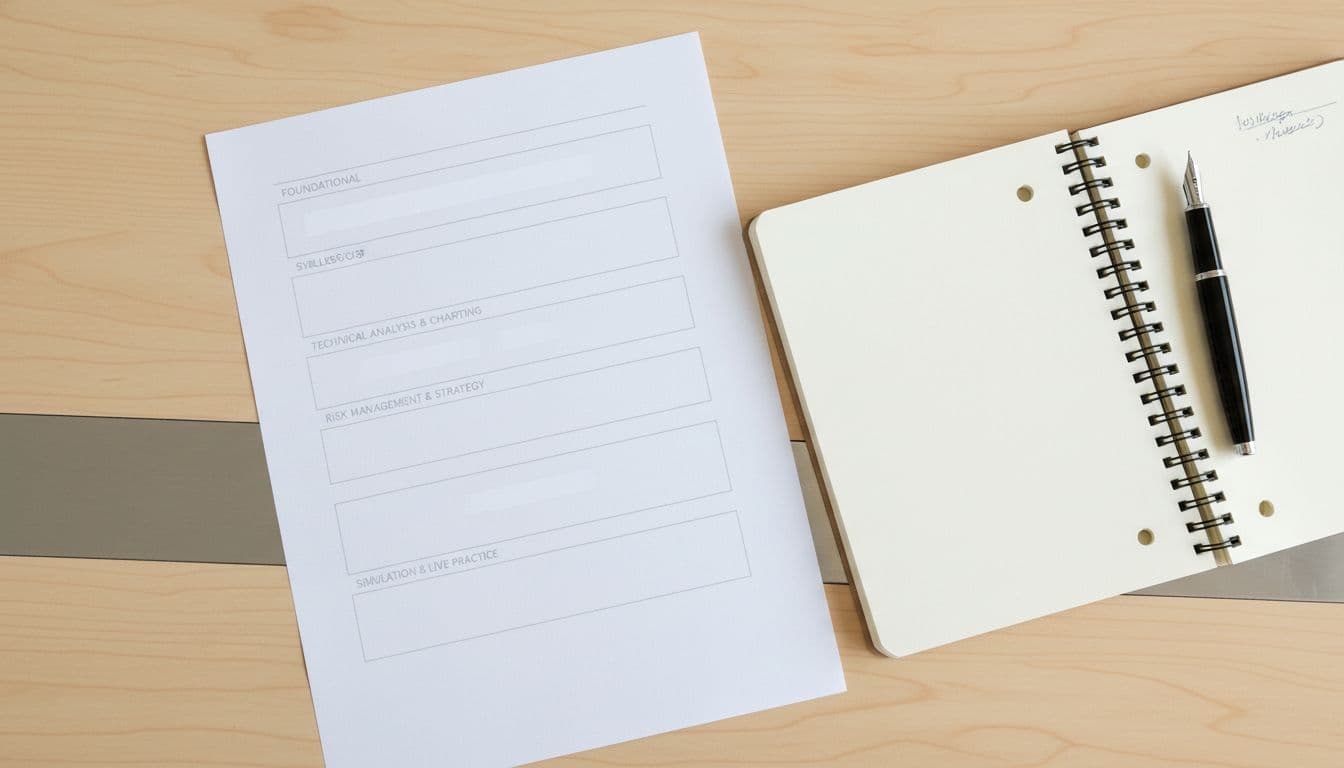
A solid forex class should have a clear syllabus, risk management, and hands-on practice
The outline should cover core topics in plain order. That includes forex basics, currency pairs, spreads, leverage, order types, chart reading, trading plans, and journaling. Demo account practice should also be part of the class.
Risk management must sit near the center of the course. If it's hidden in one short lesson near the end, that's a bad sign. A serious class teaches position sizing, stop-loss use, and how to protect capital before chasing returns.
Students also need practical work. That may include chart review, backtesting, live examples, and guided trade planning. Without practice, the course becomes expensive entertainment.
This quick comparison helps separate useful training from hype:
| What to check | Good sign | Red flag |
|---|---|---|
| Syllabus | Clear modules and lesson flow | Vague topics like "secret strategy" |
| Risk content | Taught early and often | Brief add-on |
| Practice | Demo sessions and review | Only videos and signals |
| Course details | Time, fees, support are clear | Hidden terms |
The takeaway is simple. A legit class teaches process, not excitement.
Reviews, student results, and free sessions should feel specific and realistic
Read reviews in more than one place. A good review mentions teaching style, support, class pace, and what the student learned. Specific feedback feels human. Vague praise repeated across many posts often feels planted.
Be careful with perfect patterns. If every review is five stars, uses the same tone, and praises profits more than teaching, slow down. Real student feedback usually includes detail, small criticism, or a learning curve.
Free sessions can help, too. During a trial class or webinar, watch how the trainer explains basic ideas. Do they answer direct questions? Do they admit limits? Do they spend more time teaching than selling?
If the free lesson ends with heavy pressure, the paid course usually gets worse.
Use a simple safety checklist before you pay for any forex trading class in Dubai
Even a decent course can become a bad buy if the payment terms are messy. Before you send money, shift into buyer-protection mode. Read everything and ask for written terms.
That step matters because many scams happen after trust has already been built. The sales pitch feels friendly, then the payment request arrives fast.

Read the payment terms, refund policy, and upsell offers very carefully
Ask how payment works and what happens after payment. You should receive class dates, course length, support details, and refund terms in writing. If sessions get canceled, the policy should explain the next step.
Be alert when sellers push bank transfers, crypto payments, or "today only" discounts. Those methods often reduce your options if something goes wrong.
Upsells deserve extra care. Some courses promise a complete system, then quickly push students into paid mentorships, private groups, signals, or account handling. One extra offer may be normal. Constant upselling usually means the first course was not the full product.
Walk away if the seller pressures you, avoids questions, or asks you to hand over trading control
Pressure is a red flag on its own. A legit trainer will not punish you for taking a day to think. Clear answers should come easily, especially on cost, course content, and refund rules.
Evasive replies matter, too. If simple questions get vague responses, the problem rarely improves after payment. Trust the pattern, not the promise.
Never hand over your trading account, passwords, or funds to a course provider. A training class is for learning. It is not permission for someone else to trade on your behalf or pool your money with others.
The best forex trading classes in Dubai welcome caution. They answer clearly, respect your time, and let you decide without pressure.
Good forex trading classes in Dubai are transparent, skill-based, and honest about risk. They show who teaches, what gets taught, and how the course works before asking for money.
Compare a few options, verify the trainer, and read the syllabus with care. Most of all, never pay under pressure. Protecting your money is part of learning to trade, and that lesson starts before your first class.
📞 Contact us today to begin your journey.
🟢 +𝟵𝟳𝟭 𝟱𝟴𝟵𝟲𝟳𝟴𝟴𝟳𝟮
📍 Start learning with a trusted 𝗳𝗼𝗿𝗲𝘅 𝘁𝗿𝗮𝗱𝗶𝗻𝗴 𝗶𝗻𝘀𝘁𝗶𝘁𝘂𝘁𝗲 𝗶𝗻 𝗗𝘂𝗯𝗮𝗶.

%20(1200%20x%20717%20px)%20(645%20x%20305%20px).png)
%20(2).png)
.png)
